
Arrivals and departures
Who arrived, for whom, at which door, what they were asked and what they answered, when they left, and who checked them out if they did not do it themselves.
The record
A visitor book can be rewritten with a pen. A database row can be updated by anyone with the password. The question an auditor is really asking is not "what does it say" but "how would you know if it had been changed".
How it works
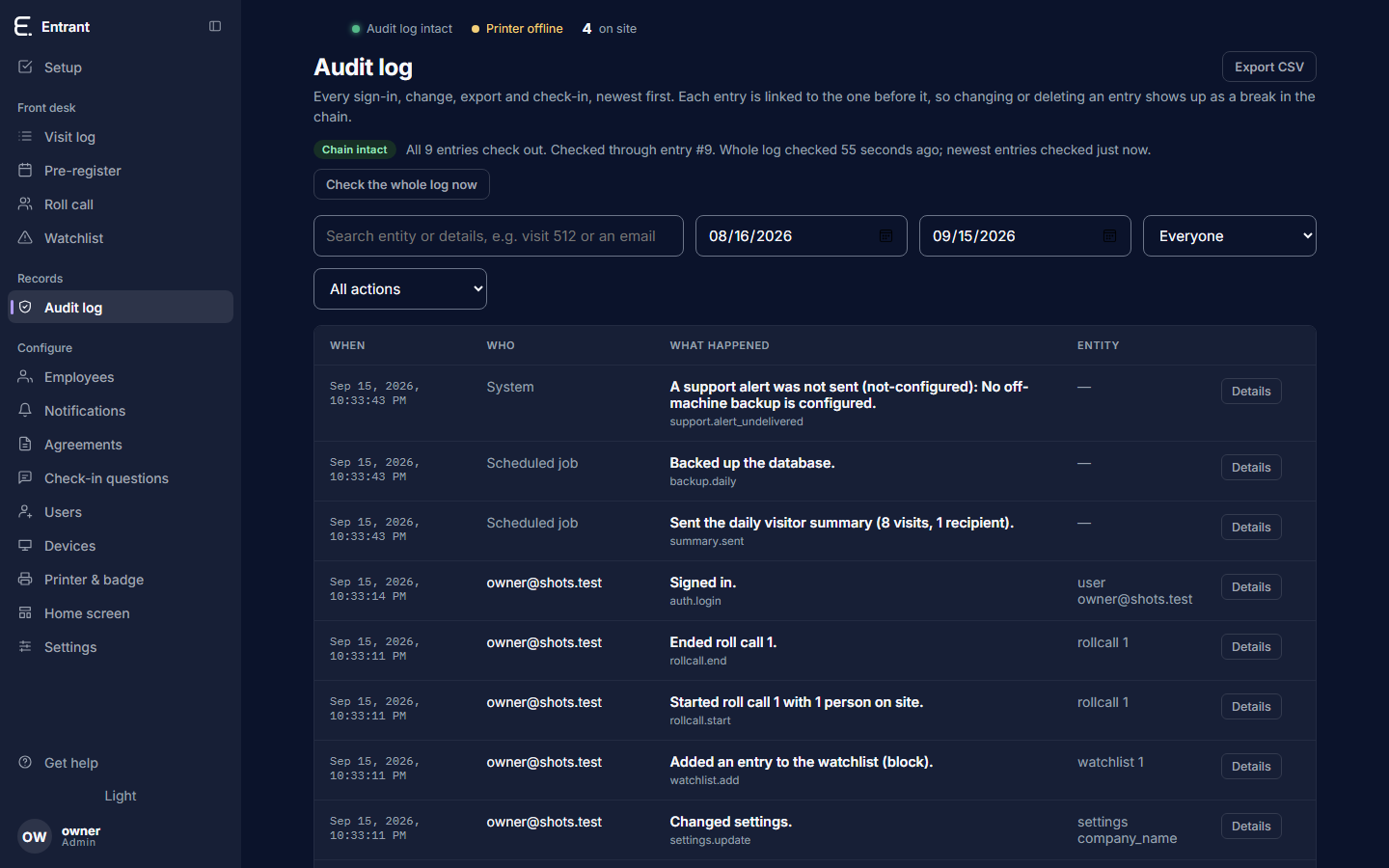
Rows are only ever appended. Every one is hashed together with the hash of its predecessor, so the log is a chain: change a row, remove one from the middle, reorder two, and every hash from there on stops matching.
The console verifies the chain — at start-up, every few minutes, and on demand — and shows the result where the people who work there will see it, not only where a script would. On the hosted service the account that serves your site is refused UPDATE and DELETE on the log by the database itself, so the software cannot rewrite history even if it were told to.
We call that tamper-evident, not tamper-proof, and the difference matters: someone with direct access to the database file can still alter it. What they cannot do is leave it looking untouched. Keep an exported copy off the machine — the product's own guidance says the same thing, in the same words.
What is in it
The log is written for the person reading it under pressure, not for a developer: sentences, not event codes.
Who arrived, for whom, at which door, what they were asked and what they answered, when they left, and who checked them out if they did not do it themselves.
Every match, what it matched against, who released the hold and the reason they gave — and the ones that cleared without anybody having to look.
Which agreement, which published version, signed by whom and when, with the hash of the document as signed.
Who started it, everyone on it, every mark and who made it, anyone who arrived while it was open, and who ended it.
Agreements published and retired, questions changed, users added, two-factor resets, settings altered — with the account that did it.
Exports taken, photographs viewed, and any support engineer who looked inside — on your log, not just ours.
Handing it over
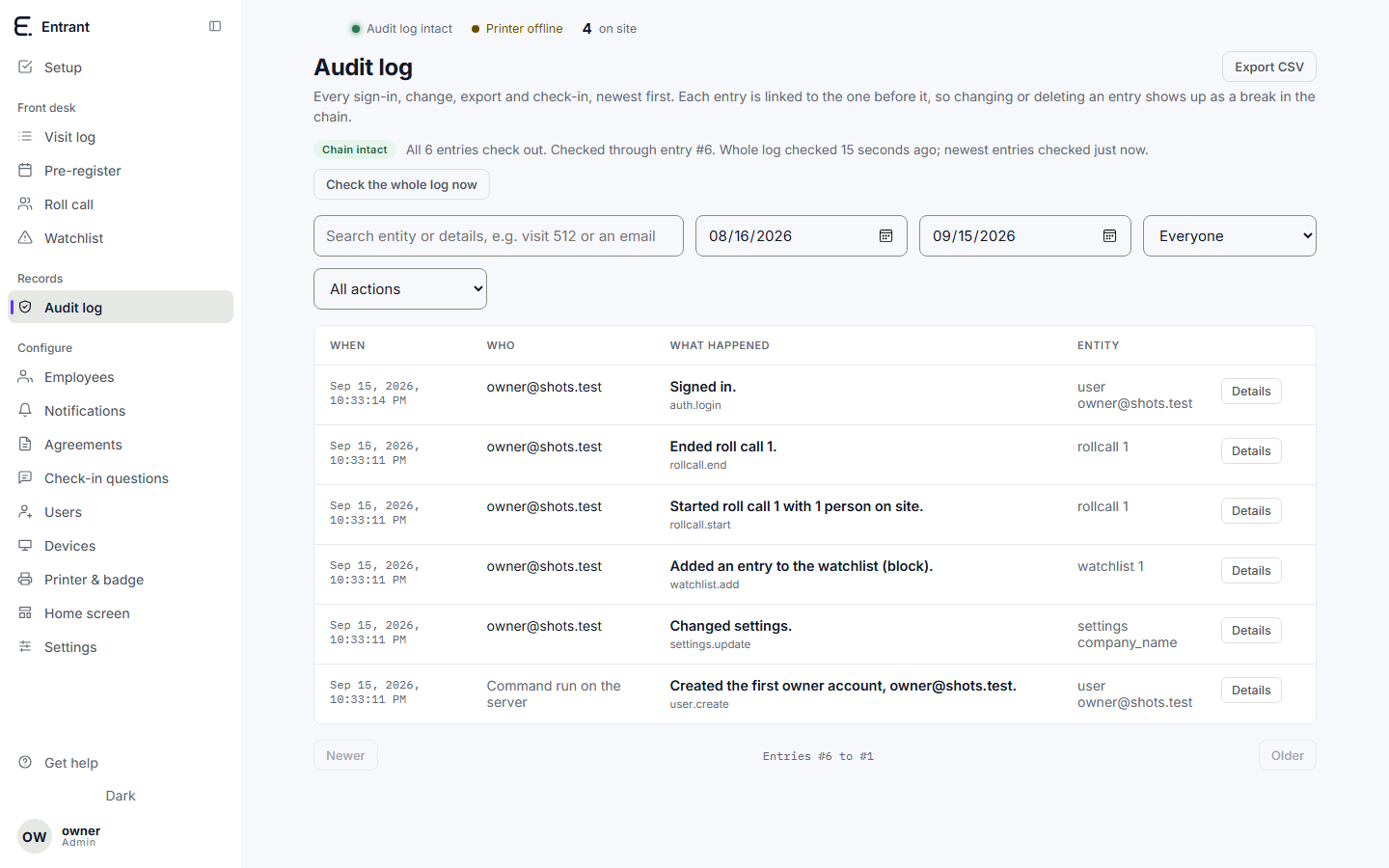
Every cell of an export is written so that a spreadsheet cannot be made to run it: a visitor who types a formula into their company name gets a company name, not a macro on the auditor's laptop. The hashes and timestamps are left exactly as they are, so the seal still recomputes.
Keeping it, and not keeping it
Visits, photographs and signed agreements each have their own life. What has passed its date is removed on a schedule rather than sitting there until someone remembers, and the removal is itself recorded.
A signed agreement is evidence of something that happened. If you stop being a customer, the obligation to have kept it does not stop with the invoice, and we do not delete it to tidy up.
Bring the questions your last audit asked. That is the fastest way to find out whether this fits.