
Evacuation
The list already exists.
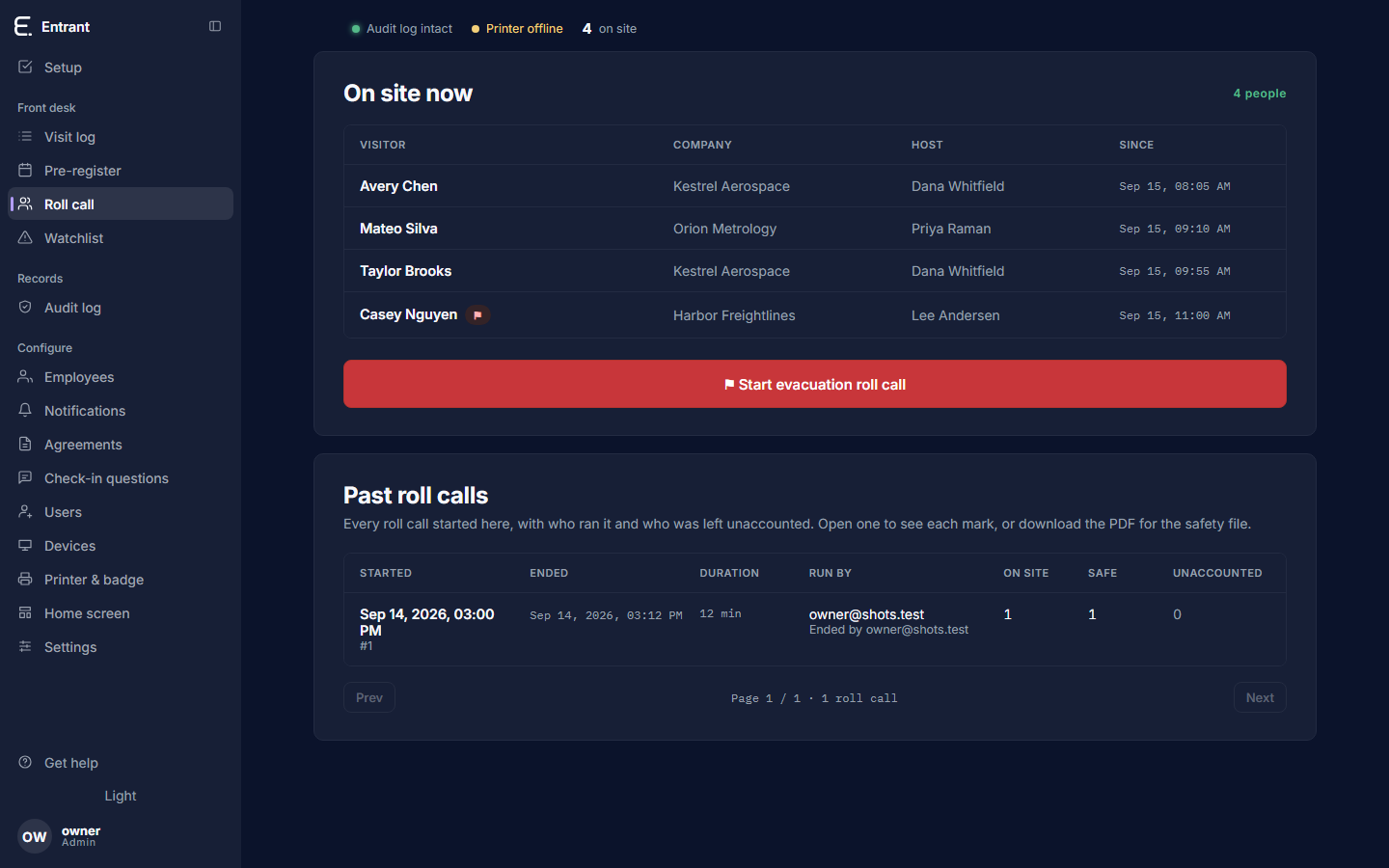
An evacuation tool bolted onto a sign-in book has to be told who is in the building, and it is told by the thing that was already wrong. Here the roll call is the same record as the door: everyone the door let in and has not let out, at the moment somebody pressed start.
In the first minute
Start it, and start marking.
-
One press
Anyone signed in to the console can start one, from the desk or from their phone on the way out. A roll call left open from a drill is superseded, so nobody is handed this morning's list at an actual fire.
-
Everyone on it
Visitors and contractors who are on site, in one list. Deliveries are not people; visitors held at the desk never entered; a walk-in still owing a signature has not been admitted. None of them pad the count.
-
Marked by wardens
Safe or unaccounted for, tapped from whatever phone the warden has at the assembly point. Every mark carries who made it and when, and two wardens marking at once cannot overwrite each other.
-
Late arrivals join
Someone who checks in while the roll call is open is added to it, tagged as having arrived during it, with the time. They are not quietly missing from the list the warden is holding.
Afterwards
What you hand to whoever asks.
Ending a roll call produces a document: who started it and when, everyone who was on it, how each person was marked and by whom, who arrived during it, who was never accounted for, and who ended it. As a PDF, and in the log, where it cannot be tidied up later.
Past roll calls stay in the console, so the drill you ran in March is still there in November when somebody asks whether you run drills.
- Every mark is on the hash-chained record, like everything else.
- A new roll call can always be started, even if the last one was left open.
- The count on the screen is the count in the export; there is no second number.
Run a drill on it.
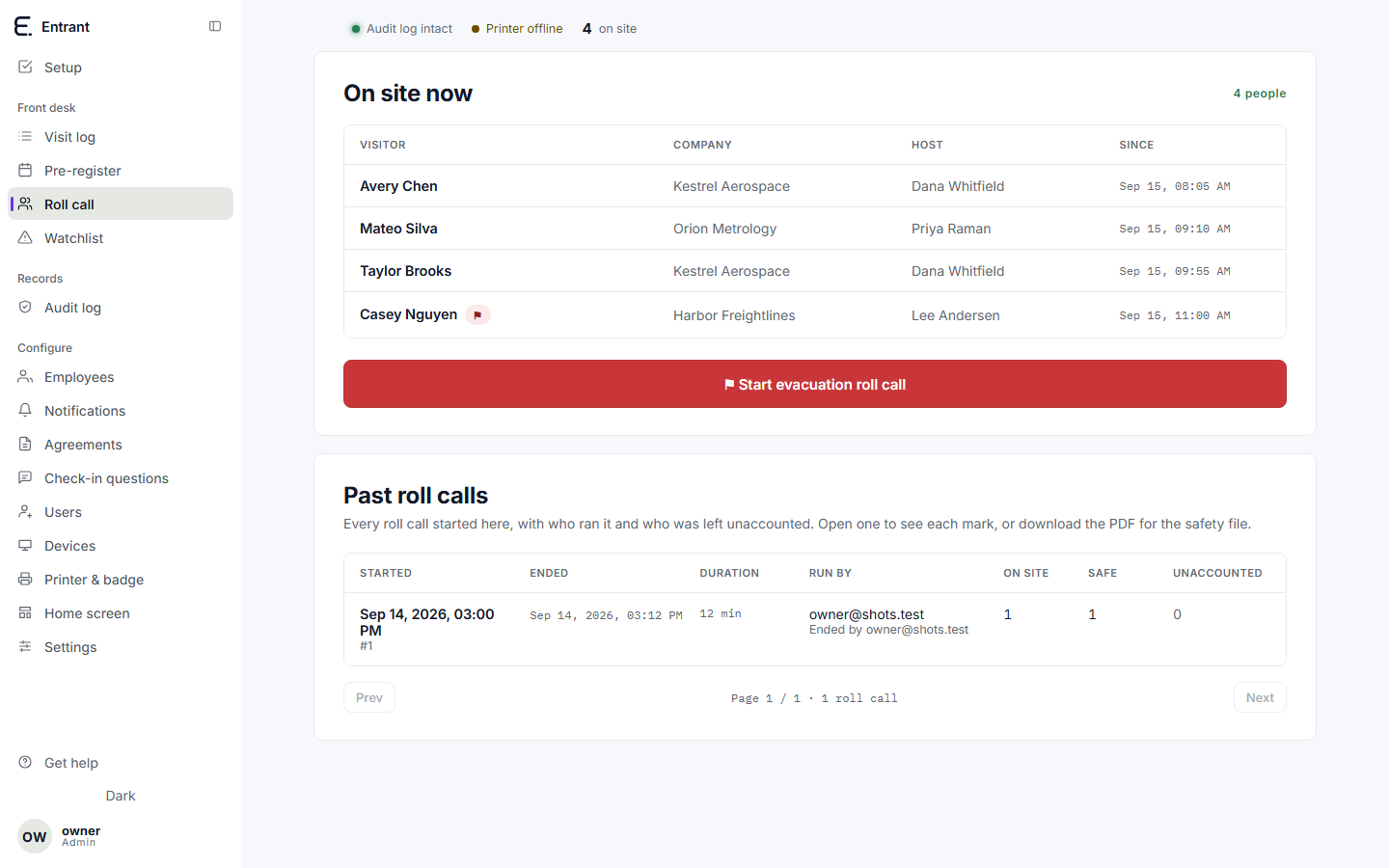
The honest test of any of this is a drill with the real list, on a real Tuesday. We will help you set one up.