
The product
The whole visit, screen by screen.
Every picture on this page is the product as it shipped, not a drawing of it. Nothing below is on a roadmap: if it is here, it is running.
01 — Arriving
The kiosk, or the phone in their pocket.
A tablet at reception runs the kiosk full screen, locked to the job. A visitor who would rather not touch a shared screen scans a QR code and does the same thing on their own phone, and someone who was invited ahead of time arrives with their details already filled in.
A returning visitor is recognised by their email address: their company and the agreements they have already signed come with them, so the second visit is shorter than the first.
- One kiosk or several, each paired to the door it stands at.
- A photograph if you require one, with consent recorded on the visit that asked for it.
- Light or dark per site, because a bright lobby and a night shift are not the same room.
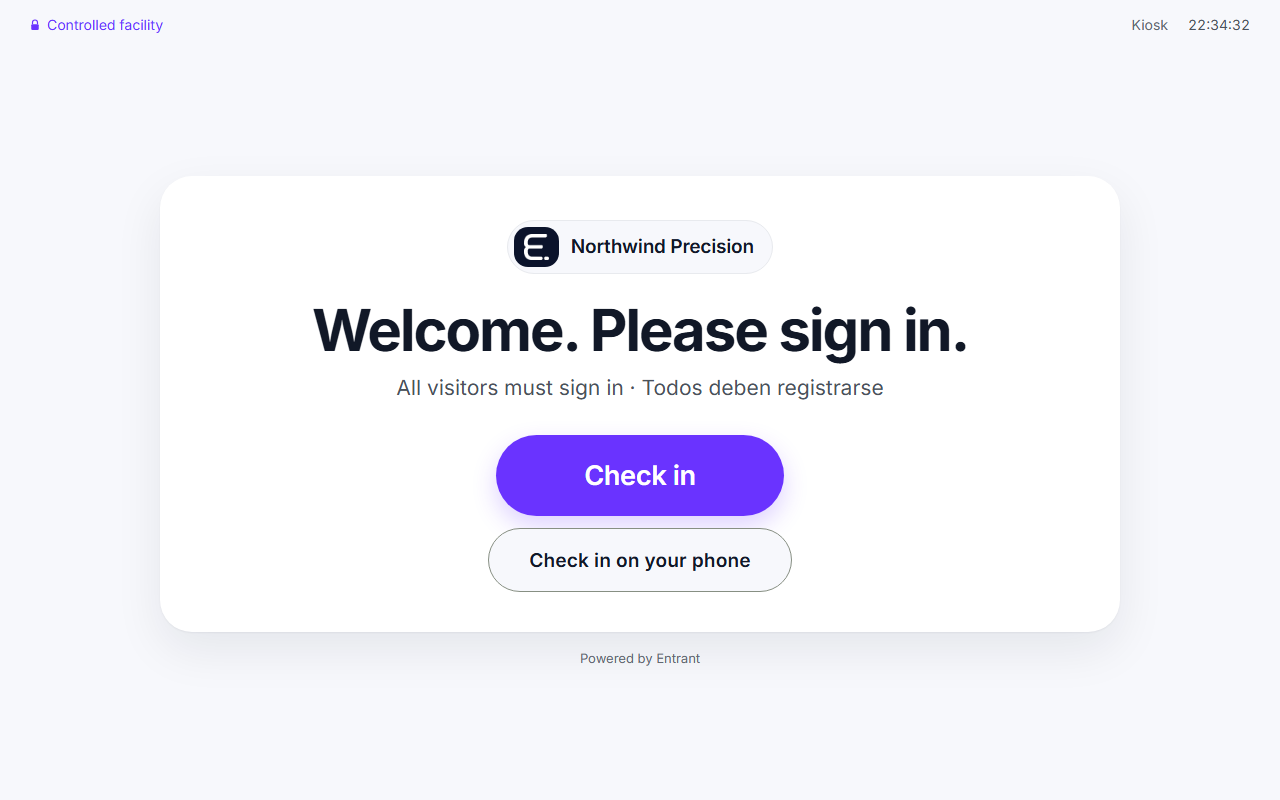
Waiting at reception, in the customer's own colours.
02 — Screening
Checked before the visit is even written.
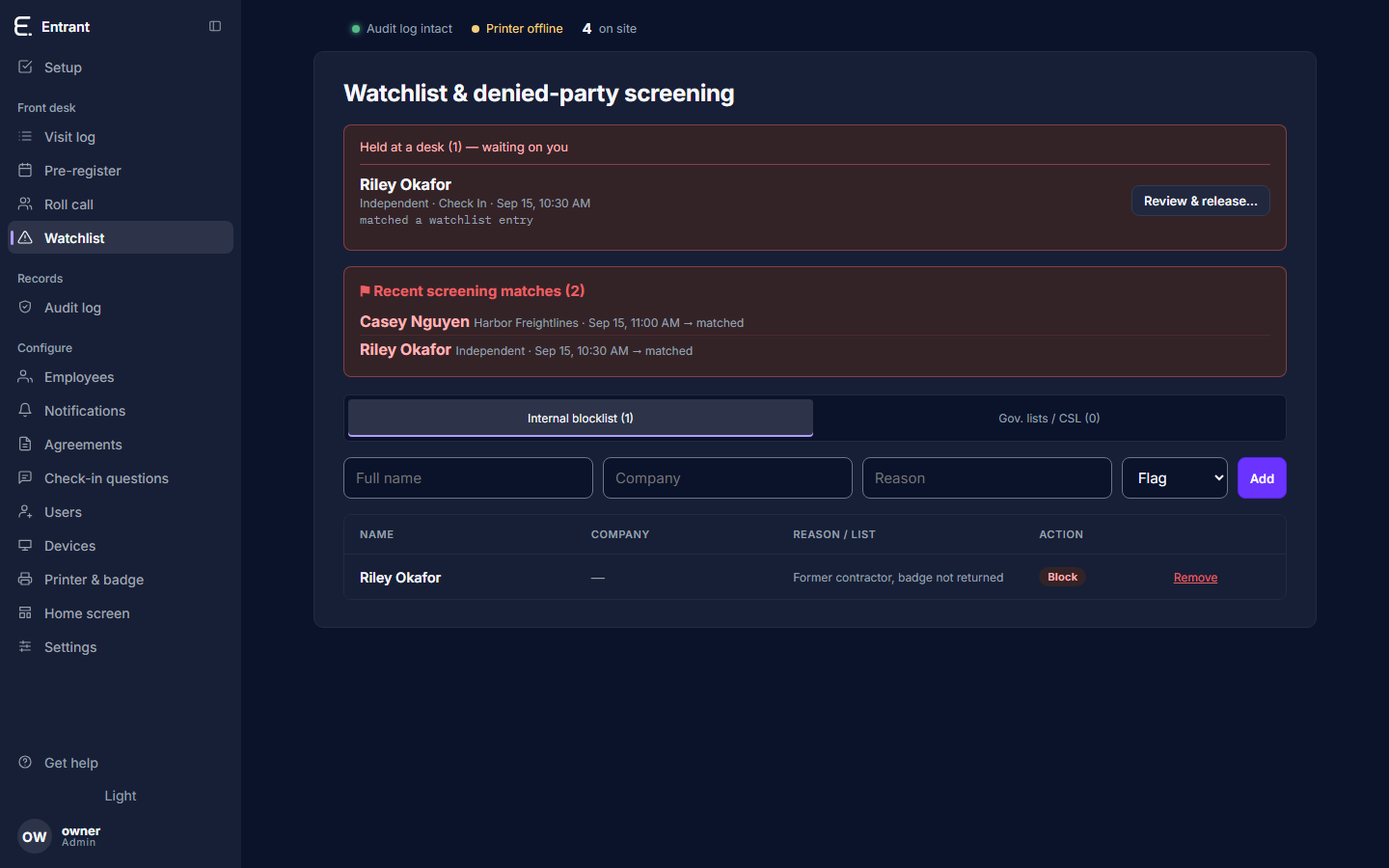
Screening runs before the visit row exists, so a blocked visitor is never briefly a normal one. Two lists are checked: your own — the escorted-off contractor, the dispute, the person a customer asked you to keep out — and the U.S. consolidated denied-party list, imported into your install.
A name on your list holds the visitor at the desk: no badge, no signature, not on the roll call, and security is emailed. A match on the government list flags the visit and tells security while the visitor carries on — which is the honest behaviour, because that matching is on a typed name and would otherwise stop people who share one.
The visitor is told only that someone is coming to finish their check-in. A match is security's information, not the lobby's. If screening cannot run at all, the check-in fails rather than letting someone through unscreened — and it keeps working with the internet down, because the list is on the machine.
03 — Agreements
Your words, their signature, kept as evidence.
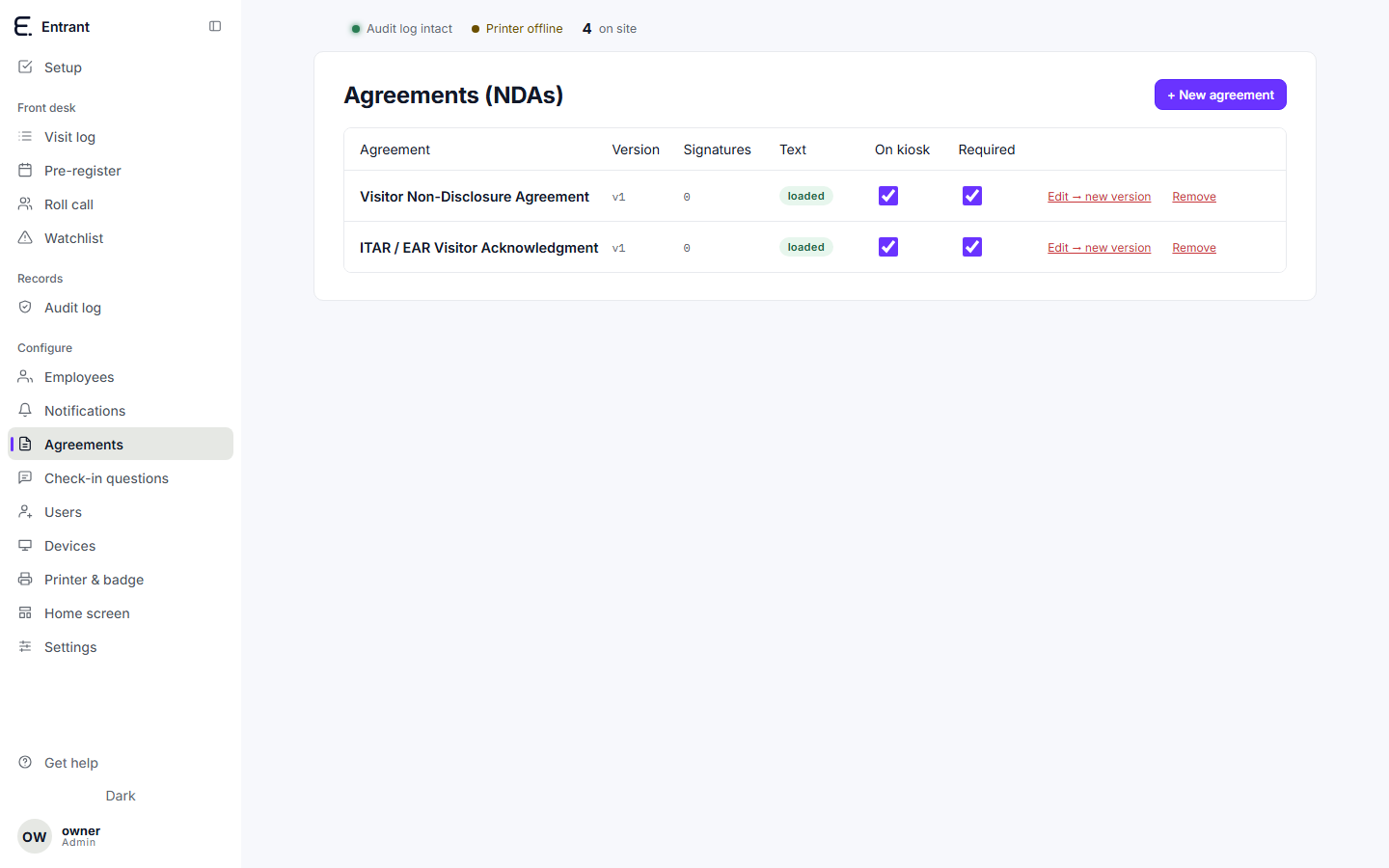
Load your NDA, your site rules, your export-control acknowledgment. Publish a version and it is the one being signed from that moment; edit it and the old visits keep the version they actually agreed to, because a record that quietly updates itself is not a record.
What is kept is the document as signed, as a PDF, with the hash of its contents, the time, and who signed it. When an auditor asks what a particular visitor agreed to on a particular Tuesday, that is one search and one file.
04 — Your questions
Ask what your site actually needs to know.
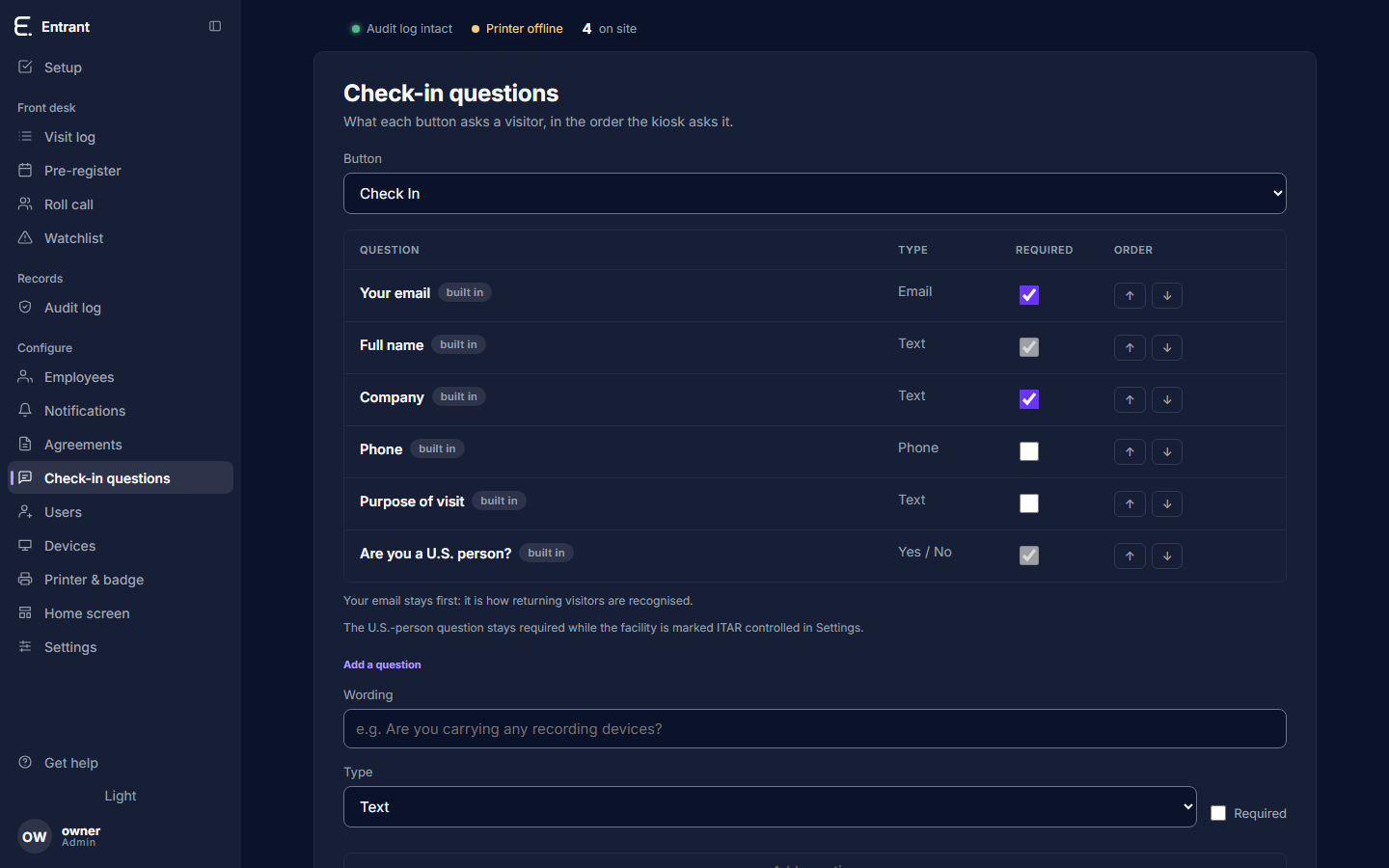
Each button on the kiosk carries its own questions: free text, yes or no, a number, or a list to choose from. A delivery is asked which carrier; a contractor is asked for a permit number; an interview candidate is asked nothing beyond their name.
Every visit keeps the questions as they were worded on the day, with the answers. Change the wording next month and last month's visit still shows what was actually asked.
05 — Telling someone
The right person knows in seconds.
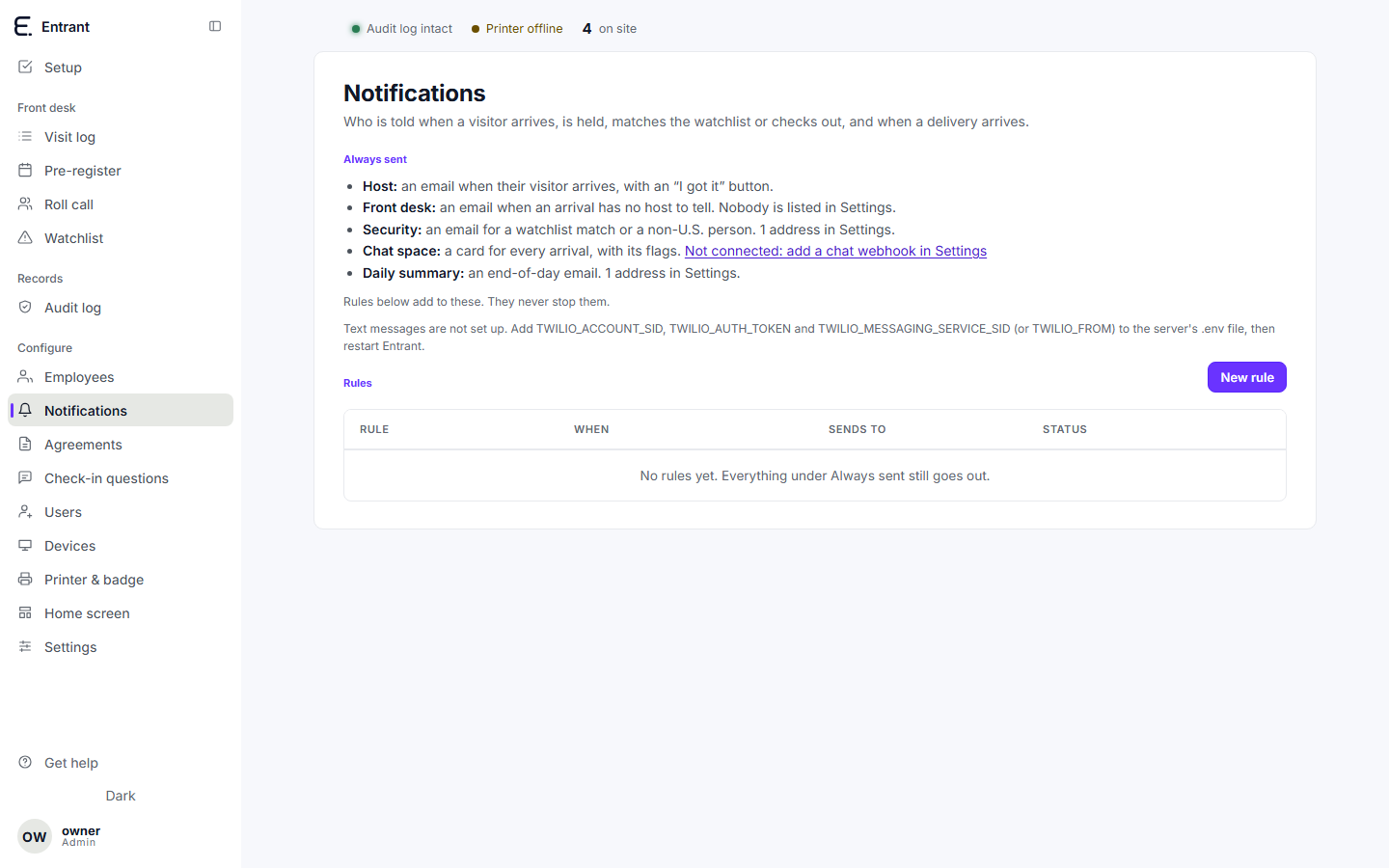
The host gets a message the moment their visitor is through. Beyond that you write rules: tell reception about every delivery, tell security about every watchlist match, text the duty manager when someone is held at the desk, remind a host who has not come down.
Email, your chat space, or a text message. Rules add to the people who are always told, and can never quietly replace them.
06 — The front desk
The log the receptionist actually works from.
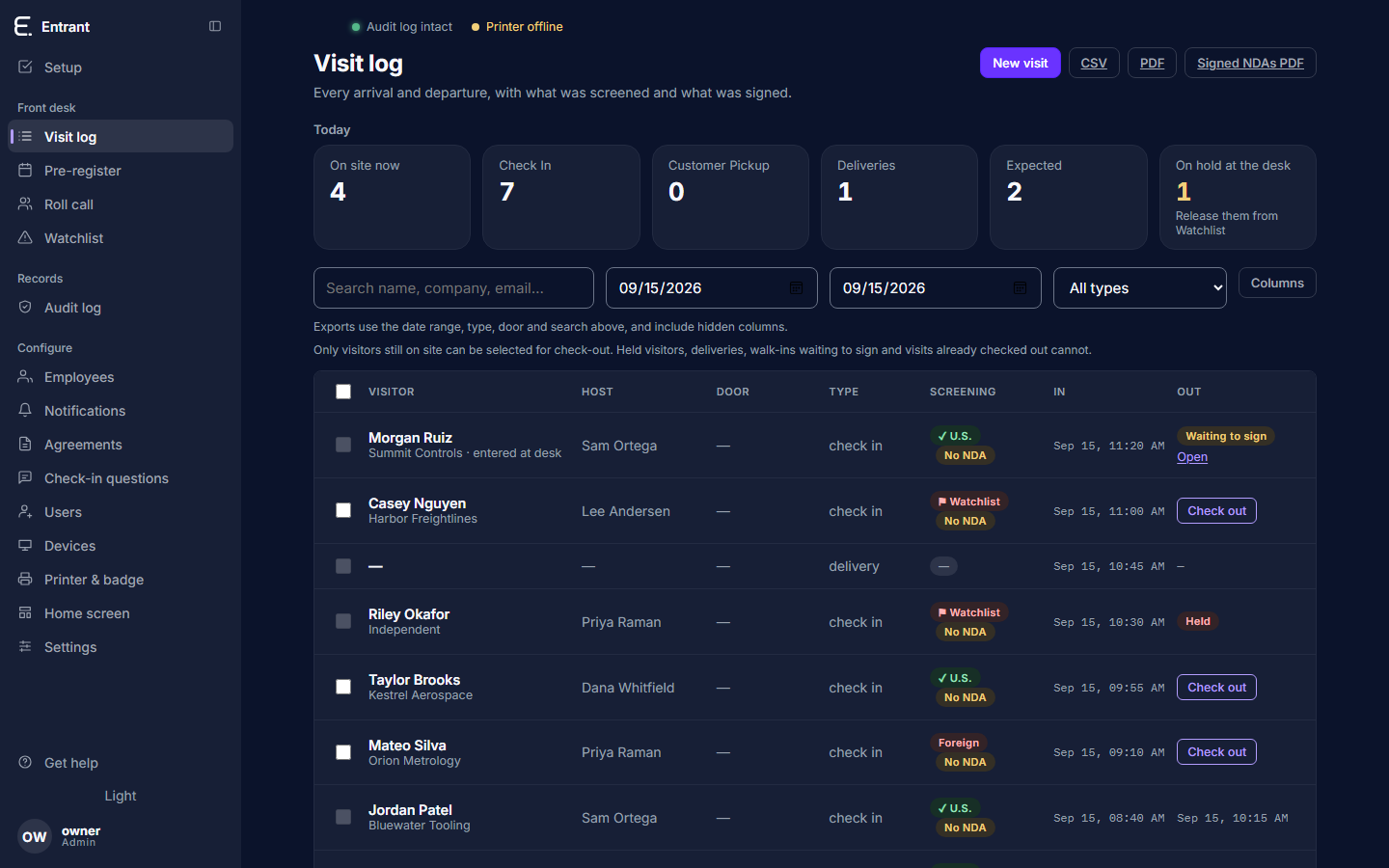
It opens on today, with tiles that count what matters — on site now, each kind of arrival, deliveries, expected, held at the desk — and every tile filters the list beneath it rather than telling you a number you then have to go and find.
When someone walks up unannounced, the desk enters the visit and the visitor finishes it on their own phone: the signature stays theirs. Anyone still owing a signature shows as waiting, and is not counted as on site until they have finished.
At the end of the day, whoever is left can be checked out in one go, with a reason recorded against each.
Then it becomes the record.
Everything above writes to one hash-chained log, which is the part an auditor cares about.